
Labor Budgeting Built onStore-Level Work Requirements
Build transparent, bottom-up labor budgets using forecasting, labor modeling, staffing inputs, and simulations. Connect financial planning with operational reality through scenario modeling, workflow collaboration, and performance visibility.
Why Labor Budgeting Breaks
Retail labor budgeting breaks down when Finance, HR, and Operations work from different assumptions. Budgets disconnected from labor demand quickly become outdated, making it difficult to balance workforce investment and financial performance.
Budgets disconnected from forecasts, labor standards, and staffing plans
Limited ability to evaluate changing business conditions before committing
Budget performance issues identified too late to take corrective action
Multiple teams working from different assumptions and disconnected processes
Align Financial Plans with Operational Reality
Logile Budgeting builds store-specific labor budgets directly from Forecasting, Enterprise Labor Model, Staff Planning, and EPS. Teams can evaluate operational and financial tradeoffs through scenario planning, structured workflows, and continuous budget-versus-actual visibility, ensuring budgets remain aligned as business conditions evolve.
Retailers can:
Build store-specific budgets from operational labor requirements
Model sales, wage, productivity, and operating changes through scenario planning
Reconcile top-down financial targets with bottom-up operational requirements
Collaborate across Finance, HR, and Operations using structured workflows
Core Capabilities
Build labor budgets that balance operational needs with financial goals before execution begins.
Store-Specific Bottom-Up Budgeting
Build budgets from integrated forecasting, labor model, and staffing inputs with automatic rollups.
Flexible Scenario Planning
Model key business assumptions while preserving versions for comparison, audit, and decision support.
Average Hourly Rate (AHR) Modeling
Convert demand-driven labor hours into labor dollars using role- and sub-department-level wage rates for accurate budgeting, forecasting, and projections.
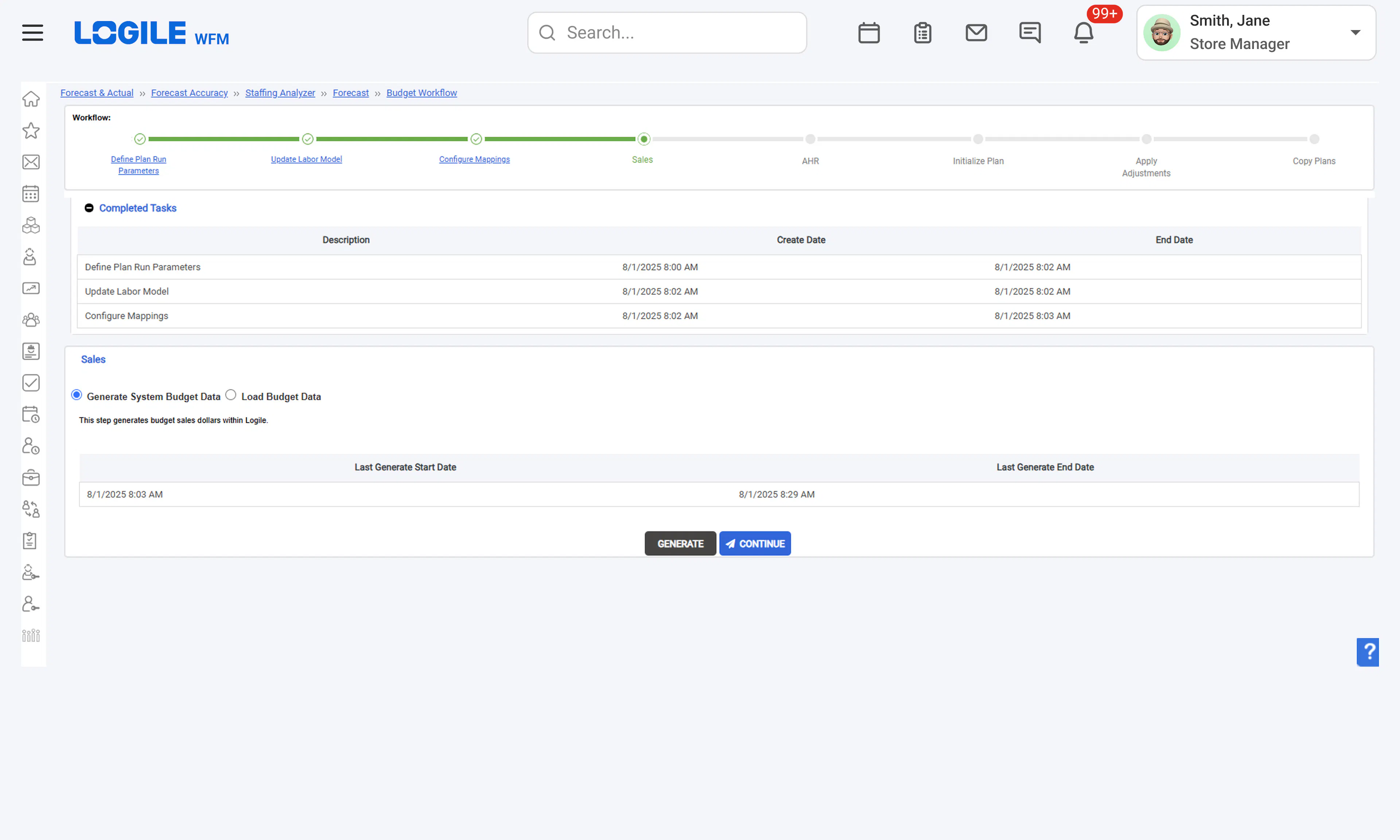
Workflow Collaboration
Route budgeting tasks and approvals with ownership, status tracking, and version control.
Top-Down & Bottom-Up Reconciliation
Compare operational labor requirements against financial targets and resolve planning gaps before budgets are finalized.
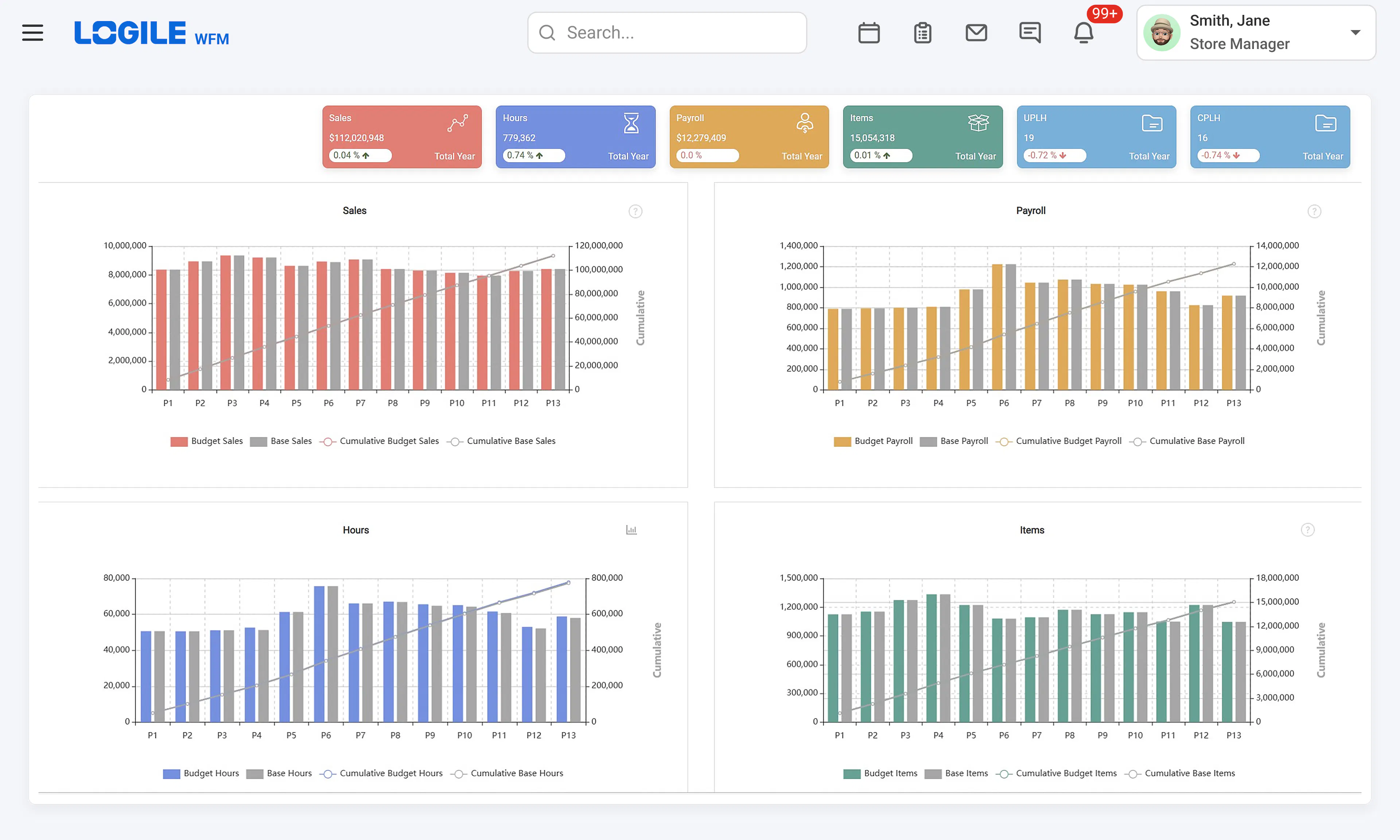
Performance Tracking Dashboards
Monitor budget-versus-actual performance through variance analysis and exception thresholds.
Economic Impact
Ground Budgets in Operational Reality
Make More Confident Planning Decisions
Improve Cross-Functional Accountability
Respond Faster to Business Change
Part of the Workforce Management Suite
Unified Labor Planning
Create workforce plans grounded in operational demand and connected execution.
Includes
Resources
Workforce Management Guide
Learn all about our planning-first approach to workforce management.
View the Guide