
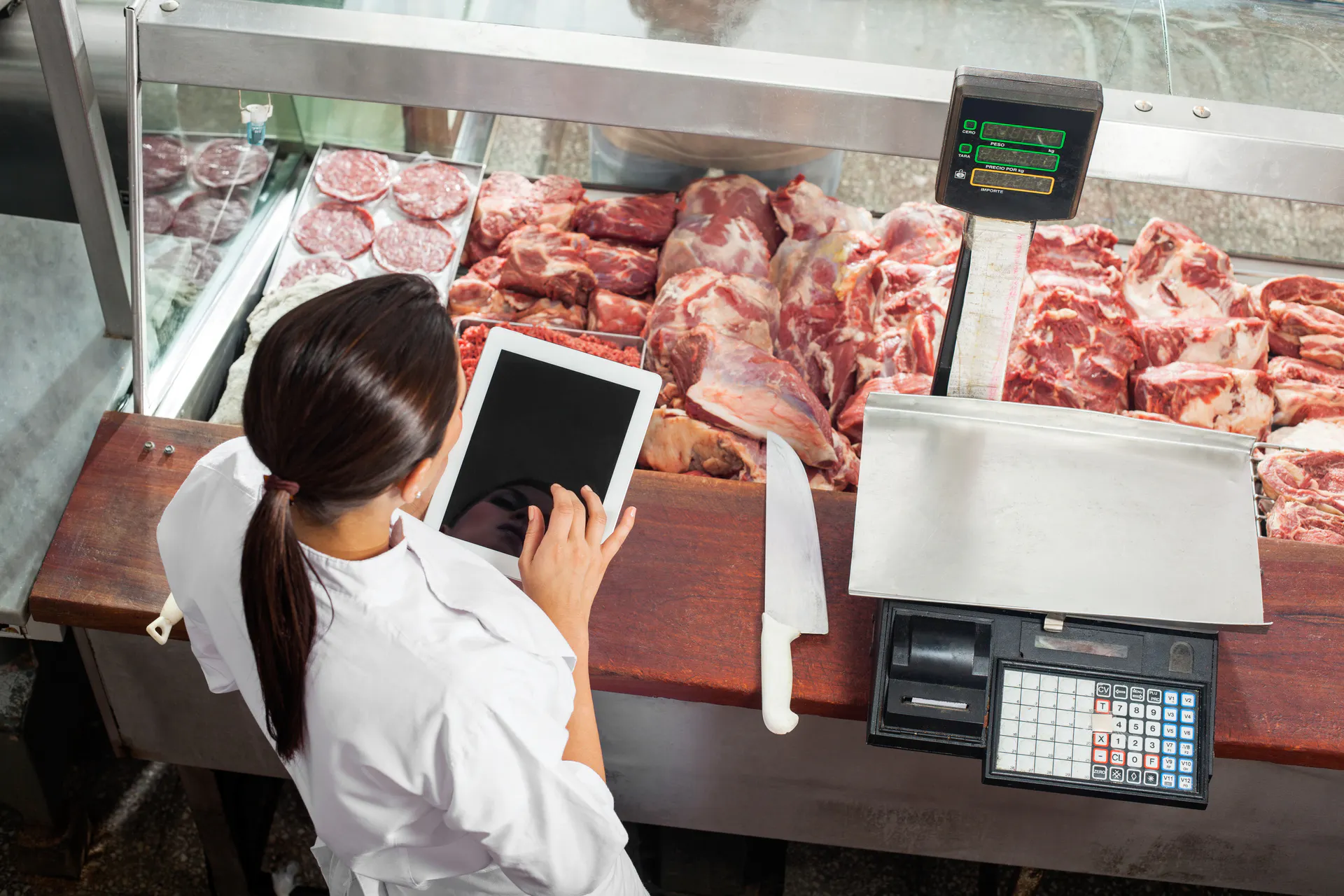
Something is changing in how retailers think about fresh operations.
For a long time, the systems supporting the store were managed in isolation. Forecasting, inventory, production, and scale management each had their place. As long as each system worked, the expectation was that the store would work too.
But fresh doesn’t operate that way anymore. Demand shifts throughout the day, production takes time, and execution directly impacts customer experience. When operations are out of sync, the disconnect shows up immediately on the store floor.
Retailers are starting to recognize that it is not enough for systems to work individually. They must work together, and that shift is bringing new attention to areas that were previously treated as background infrastructure.
Why Scale Management Is Now in Focus
Scale management has traditionally been viewed as a supporting function to manage item files, push labels, and keep things running.
But in today’s environment, it plays a much more visible role in how stores execute. Every pricing update, every label, and every item file needs to be accurate and timely for smooth operations. Without that precision and speed, the effects are rapidly felt across the operation, from incorrect prices at the shelf and missed promotions to delays at service counters and a diminished customer experience.
What often starts as a system issue quickly becomes a store issue and very quickly a customer issue. This becomes even more pronounced as systems begin to age or when transitions are required.
For IT and operational leaders supporting fresh and merchandising teams, the conversation starts to change. It is no longer just about maintaining a system or keeping it running. It becomes about ensuring that issues never reach the store and ultimately never reach the customer.
That is not always easy to do, especially when the path forward involves moving to a more expensive, less proven platform with uncertain performance and stability. In those moments, the risk extends beyond technical considerations to operational and strategic consequences.
Scale management is now getting a different level of attention not because the function itself has changed, but because the expectations around reliability, consistency, and execution have.
From Isolated Systems to Connected Execution
Meeting higher expectations requires a new approach. Retailers are moving away from thinking about scale management as an isolated system and are starting to see it as part of how execution is managed across the store. Rather than remaining on the sidelines, scale data sits directly in the path of execution, influencing pricing, labeling, production, and how inventory is reflected in the system. When these systems operate independently, stores absorb the gaps, teams compensate, and consistency becomes difficult to maintain.
A more connected approach changes that dynamic. Instead of managing separate systems and reconciling outcomes later, retailers are beginning to align decisions upfront, connecting how production, inventory, pricing, and execution work together. That shift does more than simplify systems; it improves how stores run.
- Price and label updates are distributed consistently across locations.
- Updates move quickly and reliably without manual intervention.
- Issues are identified earlier through monitoring and alerts instead of being discovered in the store.
- The overall health of the system becomes visible so problems can be addressed before they affect execution.
Just as importantly, scale data starts to play a broader role than functioning solely as an output. It becomes an input, contributing to inventory visibility, production planning, and how decisions are made across fresh.
A More Connected Way to Move Forward
This is the direction many retailers are starting to move toward and it is the foundation of how we approach Fresh Operations Management at Logile.
Scale management is not treated as a standalone system to be maintained. It is integrated directly with production planning, inventory visibility, margin management, and store execution. That means it operates as part of a broader system where decisions stay aligned rather than as an isolated tool.
The focus is on reliable execution at scale. Pricing updates and labels are accurate and consistent, data moves quickly across stores, and system health is visible so issues can be addressed proactively. Transitions from existing environments can be handled without disrupting store operations.
For many retailers, scale management becomes the starting point, often driven by the need to improve reliability or navigate a required transition. But once connected, it opens up a broader opportunity to improve visibility across stores, reduce operational friction, and run fresh as a more coordinated system where execution becomes more predictable and less reactive.
The Opportunity Ahead
What may feel like a forced decision is also an opportunity to rethink how store operations are supported. Scale management now sits much closer to how stores execute and how customers experience fresh, making this more than just a system replacement.
It can be the first step toward choosing a solution that connects production, inventory, pricing, and execution into a more unified approach. Instead of managing separate systems, retailers can begin moving toward a single connected platform that supports how the store actually runs.
Because when those decisions stay aligned, execution becomes more consistent and proactive. That is what turns scale management from a point of risk into a foundation for better fresh performance and more consistent execution across every store.
Recent Posts
Holiday Is the Ultimate Test of Your Labor Plan
2026-10-05
Holiday puts every labor planning assumption to the test. See how retailers can model demand, staffing, service, and cost scenarios before stores have to.
Read More
Fresh Operations Industry Survey
2026-10-01
Logile’s survey of 200 retail leaders reveals fresh operations challenges across visibility, shrink, labor planning, AI and technology.
Read More
Back-to-School Is Ending: The Q4 Retail Rush Is Already Here
2026-09-01
Back-to-school is ending, but Q4 retail demand is already building. Learn how retailers can prepare labor plans for holiday traffic, promotions and fulfillment.
Read More