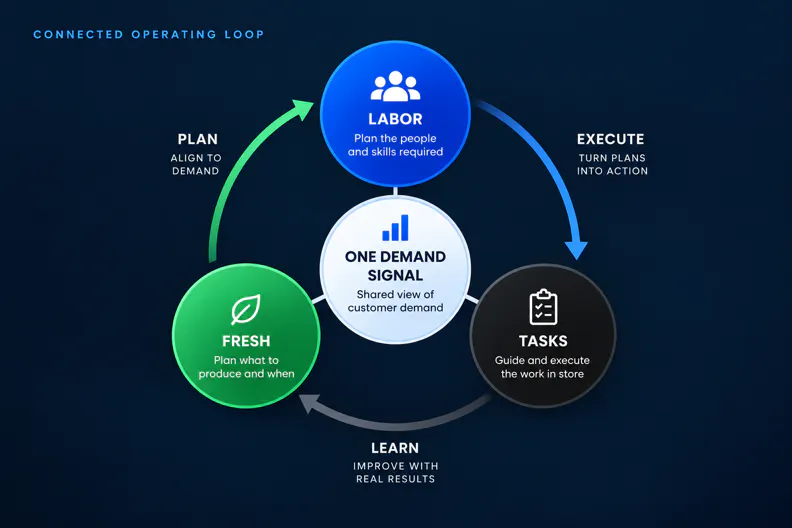

One demand signal. One connected plan. Better fresh execution.
Discover how Schnucks and Logile are connecting forecasting, production, labor and store execution to improve availability, reduce shrink and make every labor hour count.
Tuesday, November 10 | 2 - 3pm ET
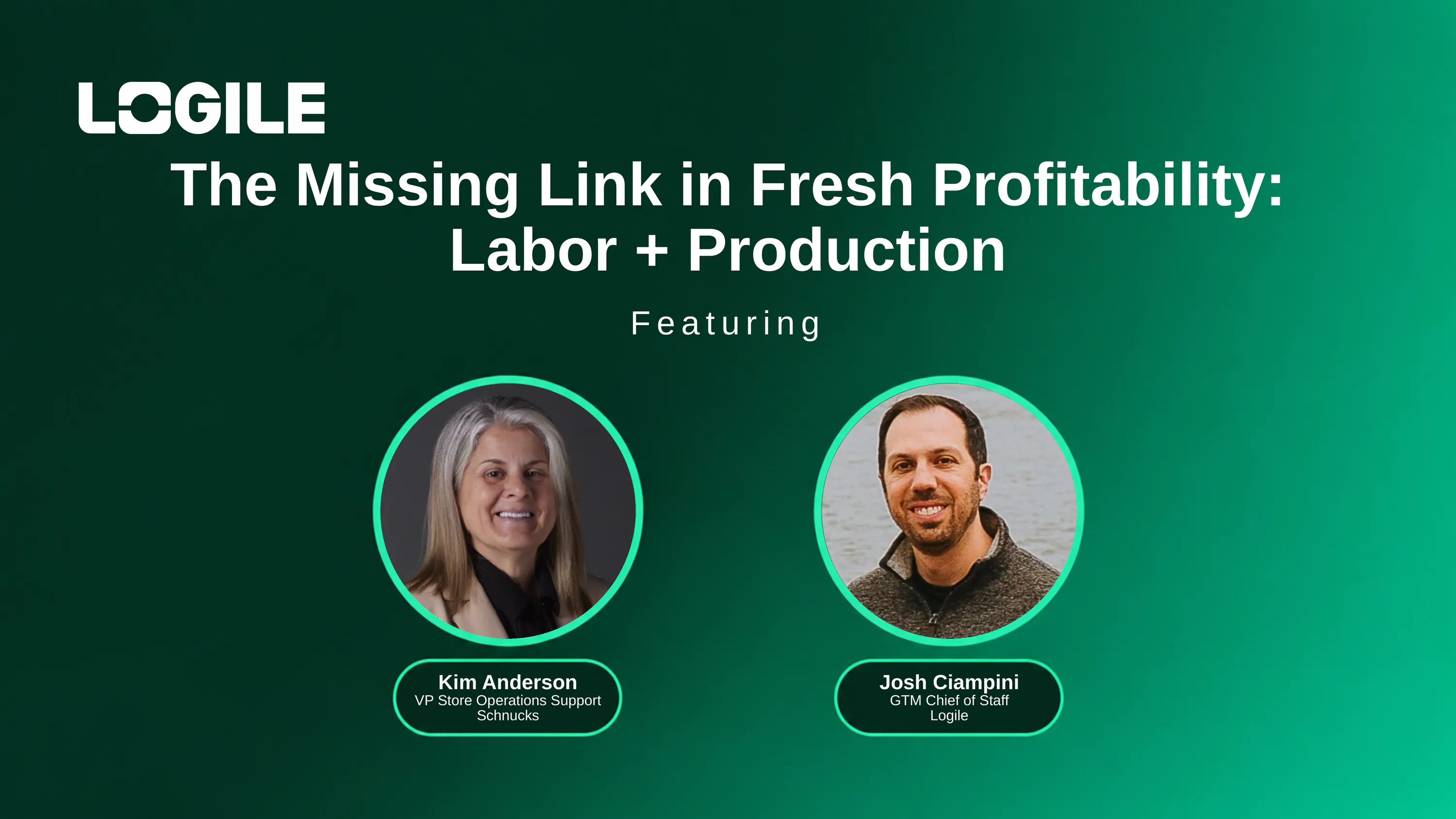
Featuring:
- Kim Anderson, VP Store Operations Support, Schnucks
- Josh Ciampini, GTM Chief of Staff, Logile
About the Webinar
Fresh is driving grocery traffic and differentiation, but delivering that experience profitably is increasingly complex. Demand shifts throughout the day, shelf lives are short, and production depends on having the right people available at the right time.
Yet forecasting, production and labor schedules are often planned separately. The result? Excess shrink, empty displays during peak demand and teams constantly reacting instead of executing.
What if the entire fresh department could work from one connected plan?
Join Kim Anderson of Schnucks and Josh Ciampini of Logile to explore how Schnucks is bringing fresh production, labor planning and store execution together. Learn how one AI-powered demand signal can connect what needs to be produced, the labor required and the tasks needed to execute, helping stores improve service, productivity and profitability.
What You'll Learn
- Where fresh planning breaks down: How disconnected forecasting, production and labor decisions create shrink, missed sales and wasted labor hours.
- Inside Schnucks' connected approach: How Schnucks is bringing fresh production, workforce planning and tasks together around one demand signal.
- From forecast to store-floor execution: How production planning, yield management and grind traceability support more coordinated operations.
- Making every shift count: How aligning production requirements with labor and tasks helps improve availability, productivity and profitability.
Integrated Strategy for Labor, Fresh and Tasks
Connect forecasting, production, inventory, and daily execution around one demand signal. Logile Fresh Operations helps teams produce what’s needed, replenish at the right time, and keep products available with less waste.