
Simulate, Align, and OptimizeEnterprise Labor Decisions
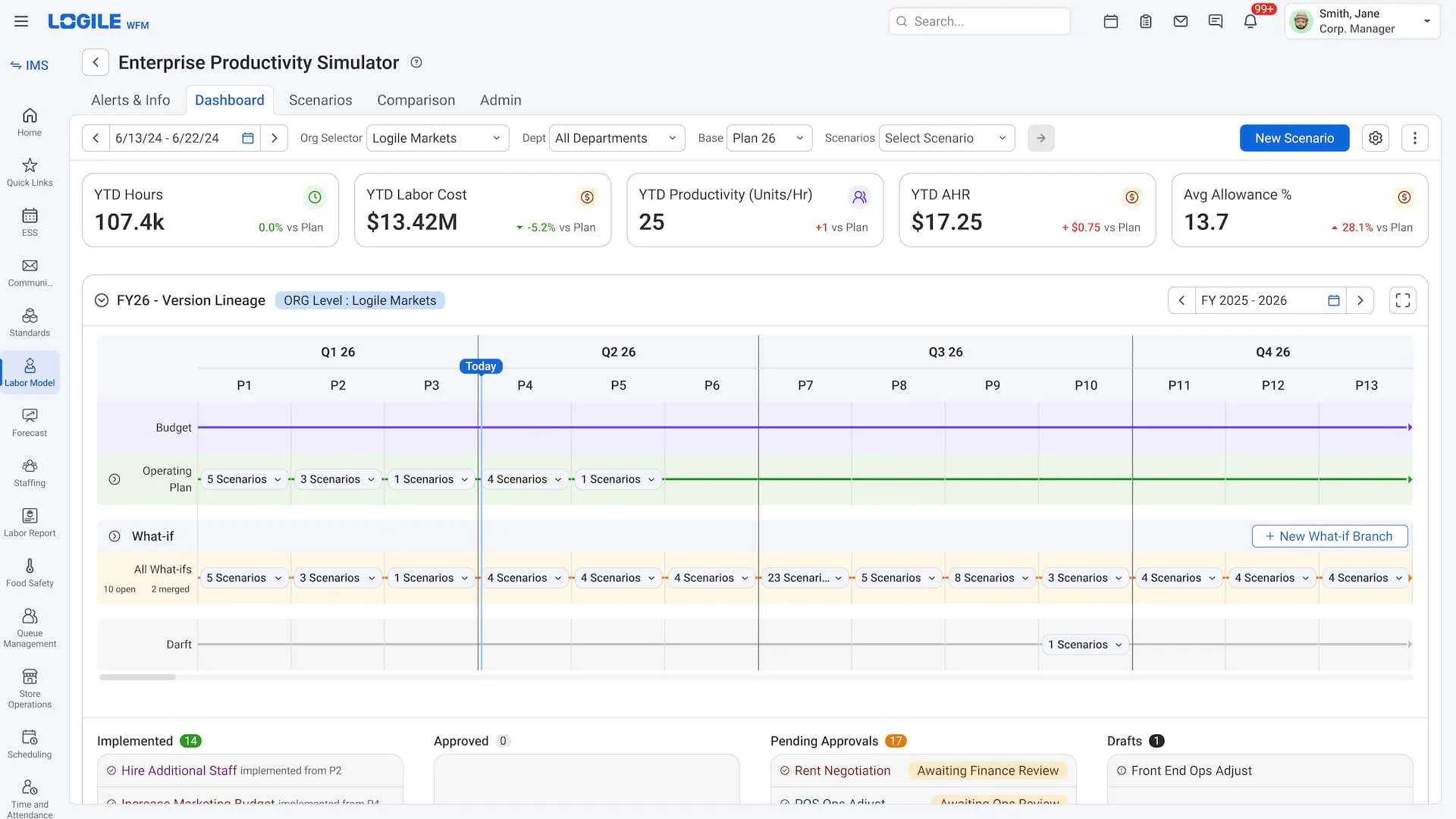
Enterprise Productivity Simulator (EPS) helps retailers simulate workforce, productivity, and operational changes before implementation, enabling better decisions across the enterprise.
Why Labor Planning Breaks
Labor planning has become increasingly difficult as retailers balance service, productivity, labor costs, and compliance across hundreds or thousands of stores.
Yet many workforce decisions are still made without understanding how they'll perform once executed in stores. EPS closes that gap.
Limited visibility into rollout impact
Hard to scale enterprise plans store-by-store
Workforce decisions disconnected from outcomes
Static plans that can't adapt
Simulate Workforce Decisions at Scale Before Rollout
EPS combines workforce simulation, operational modeling, and scenario planning so organizations can confidently validate changes before implementation.
Retailers can evaluate:
Cost, service, and productivity tradeoffs
Staffing levels and role deployment
Labor standards and operational drivers
Forecast, budget, and workforce assumptions
Core Capabilities
Evaluate every workforce decision against operational reality — before it reaches the store floor.
Enterprise Workforce Simulation
Model and compare operational and workforce changes across stores, clusters, regions, or the entire organization.
Continuous Scenario Planning
Continuously evaluate workforce decisions as forecasts, operational conditions, productivity assumptions, and financial targets evolve.
Operational & Workforce Adjustments
Evaluate new ways of working by adjusting labor hours, staffing models, and workforce assumptions before rollout.
Granular Time-Based Modeling
Analyze and distribute labor where and when it is needed to serve customers and complete work effectively.
Cross-Functional Planning Alignment
Align Operations, Finance, HR, Industrial Engineering, and Labor Planning around a shared workforce decision framework.
Governed Workflow & Approvals
Enable structured review, approval, audit tracking, alerts, and controlled implementation of workforce decisions.
Economic Impact
Improve Productivity
Evaluate new ways of working before rollout and identify opportunities to improve workforce performance.
Respond Faster
Adapt plans as demand, labor costs, and business conditions change.
Improve Execution
Ensure labor plans work in stores, not just on paper.
Balance Tradeoffs
Optimize cost, service, staffing, and compliance decisions before implementation.
Part of the Workforce Management Suite
Unified Labor Planning
Create workforce plans grounded in operational demand and connected execution.
Includes
Resources
Workforce Management Guide
Learn all about our planning-first approach to workforce management.
View the Guide