
Recent refrigeration disruptions highlight why continuous visibility, earlier detection and coordinated action matter for protecting fresh food and retail operations.
A refrigeration disruption might start with a temperature reading, but its impact can reach far beyond the refrigerated case. For grocery retailers, it can mean compromised inventory, lost sales, additional labor, food safety concerns and a disrupted customer experience.
Recent reports of cyberattacks affecting supermarket refrigeration systems across Europe have brought these risks into the spotlight. While the causes behind these incidents are unusual, the operational challenge is familiar. Whether a temperature excursion results from an equipment malfunction, power interruption or unexpected disruption, how quickly can a retailer recognize the problem, understand what's at risk and respond?
The risks hiding between temperature checks
A cooler door left open, a power interruption or equipment gradually losing cooling capacity can create problems long before anyone notices. And they don't always happen during store hours.
Traditional food safety processes rely heavily on associates checking temperatures, recording readings and following up on exceptions. Those checks matter, but they capture a moment in time. What happens between checks can be just as important.
Store teams are also being asked to do more with fewer people. Between serving customers, replenishing shelves, preparing fresh foods and completing compliance activities, repetitive temperature logs compete with urgent work. Under that pressure, manual checks can become another task to complete, making it harder to ensure records consistently reflect actual conditions.
For retailers operating hundreds of stores, that creates a visibility and assurance gap. The question isn't just whether a check was recorded. It's whether the business has a dependable picture of what's happening.
From periodic checks to meaningful alerts
Imagine a refrigerated display case beginning to warm at 2 a.m. With periodic checks, the issue might not be discovered until opening. Continuous monitoring can identify unusual conditions sooner, creating an opportunity to investigate and act.
But effective monitoring isn't simply collecting more readings or sending more alerts. Refrigeration temperatures naturally fluctuate when doors open, products are replenished or equipment cycles. A single out-of-range reading doesn't necessarily mean food is at risk.
Thermal Intelligence evaluates multiple readings over time, considering both the severity and duration of temperature excursions to determine when an alert is warranted.
Product-simulating sensors can also offer a more meaningful view of how temperature conditions may affect the food being protected.
That distinction matters. Alerts triggered by isolated readings can produce false positives and alert fatigue. When every fluctuation demands attention, associates may begin treating notifications as background noise. More meaningful alerts help teams focus on exceptions that warrant investigation.
An alert is only useful when it leads to action
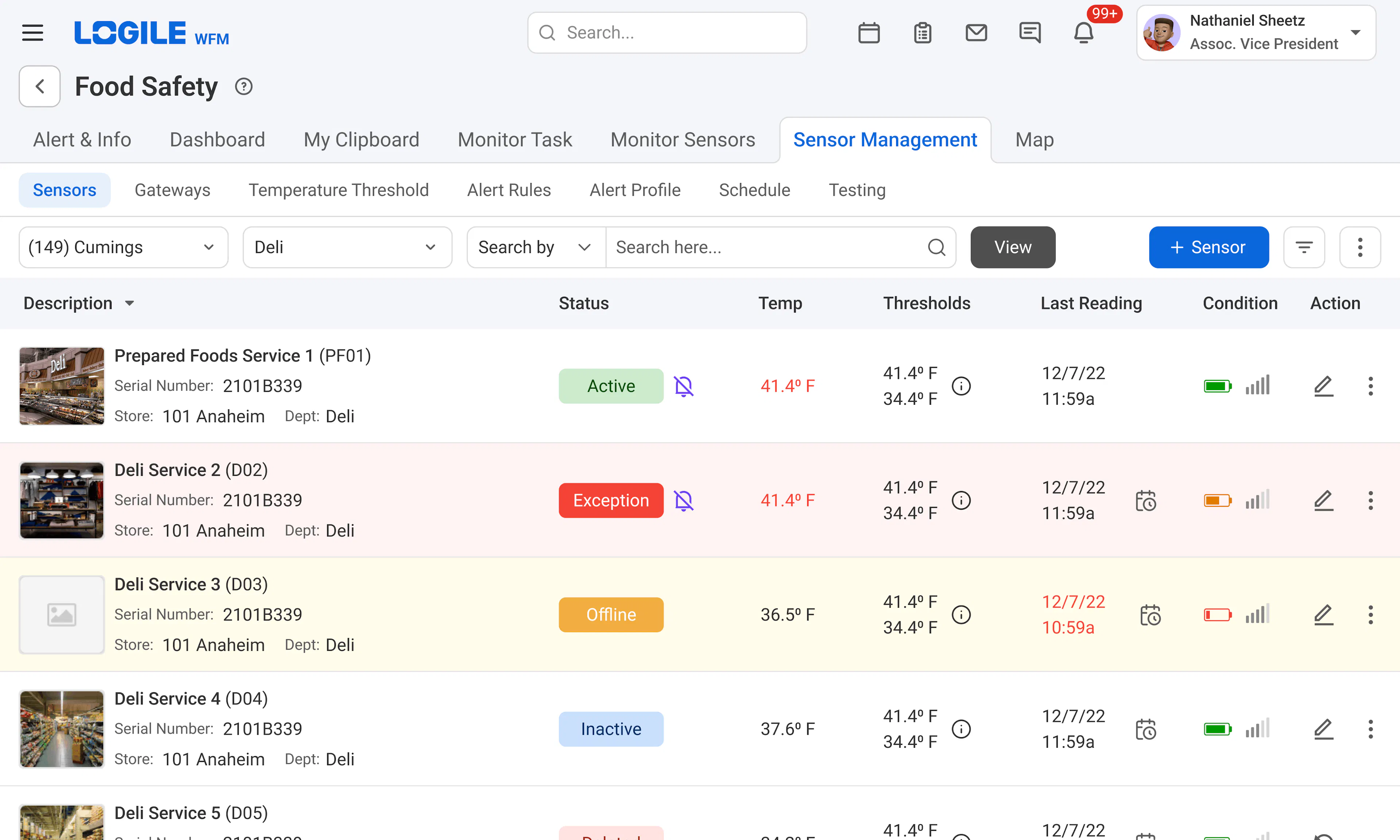
When a freezer experiences a prolonged temperature excursion, decisions follow quickly. Who should be notified? Which products may be affected? Should inventory be isolated? Is a refrigeration service call necessary? Does the issue require corporate approval before maintenance can be dispatched?
A proactive approach connects monitoring with the people and workflows responsible for responding. Relevant exceptions are escalated, corrective actions are guided and the response is documented. That record helps demonstrate active food safety management rather than simply showing that a box was checked.
And the labor opportunity is substantial. Some Logile customers using Thermal Intelligence and Food Safety Management have reported savings of upwards of three labor hours per store per day by reducing manual checks and administrative tasks.
Across 100 stores, that could represent more than 100,000 hours annually redirected toward serving customers, improving fresh availability and supporting incremental sales. The opportunity isn't simply to reduce administrative work, but to put valuable associate time where it can make a greater difference.
The value goes beyond labor. Earlier intervention may help limit food loss and operational disruption. Historical temperature trends and recurring exceptions can also inform decisions about servicing an asset, evaluating repeat repair costs or planning its replacement.
Food safety belongs in the broader fresh operation
A refrigeration issue rarely stays contained to equipment. Associates may need to inspect or relocate inventory, managers may adjust production or replenishment, maintenance may intervene and customers may find products unavailable.
That's why food safety shouldn't operate in isolation from demand forecasting, inventory, labor planning and store execution. Connected monitoring and digital workflows help retailers coordinate the response and understand its impact across the store.
Building a more proactive approach
The European incidents show how quickly unexpected disruptions can affect grocery operations. Cyberattacks on refrigeration systems may be uncommon, but equipment malfunctions, power interruptions and temperature excursions are familiar risks. Whatever the cause, earlier visibility can make a meaningful difference.
Monitoring doesn't prevent every incident or guarantee that affected food can be saved. It can, however, surface meaningful exceptions sooner, support timely action and create a documented history of conditions and responses.
At Logile, we're advancing this approach through Thermal Intelligence and Food Safety Management as part of our broader Fresh Operations Management solutions, connecting continuous monitoring with the workflows and teams responsible for protecting fresh food.
Because meaningful food safety isn't just about recording temperatures or documenting compliance. It's about recognizing risks sooner, responding with confidence and making better decisions that protect products, people and profitability.
In grocery retail, every degree matters.
FAQs
Continuous temperature monitoring tracks refrigeration conditions throughout the day and night, helping grocery retailers identify temperature changes between manual checks. It gives teams earlier visibility into potential problems so they can investigate, respond and document corrective actions.
Logile Thermal Intelligence evaluates multiple readings over time, considering the severity and duration of temperature excursions. This helps distinguish brief fluctuations from conditions that warrant investigation, reducing unnecessary alerts and helping store teams focus on meaningful exceptions.
Automated temperature monitoring can identify refrigeration problems earlier, giving teams more time to respond and potentially limit food loss. When connected with digital food safety workflows, it can also reduce repetitive temperature logging and administrative work while maintaining a documented history of conditions and responses.
Temperature monitoring supports detection and response to temperature changes; it does not prevent cyberattacks. Whether a disruption stems from equipment failure, a power interruption or a cyber incident, monitoring can help retailers recognize abnormal conditions sooner and coordinate their operational response.
Recent Posts
Shoppers Are Abandoning $113 Shopping Trips When Stores Aren’t Ready for the Rush
2026-11-12
Shoppers abandon trips worth $113 when stores aren’t ready for the rush. See how peak-hour understaffing shapes where they spend.
Read More
Four Peaks, One Team: What the Rest of the Holiday Season Will Ask of Your Stores
2026-11-06
Plan retail labor for promotions, Cyber Week, gifting and returns. Connect changing holiday demand to staffing, budgets and better 2027 planning.
Read More
What 1,000 Shoppers and 200 Retail Leaders Told Logile About Fresh Operations
2026-10-08
Fresh shapes where shoppers buy groceries and which stores they trust. Two Logile studies reveal a gap between shopper expectations and retailers’ visibility into fresh operations—and where grocers can focus their efforts.
Read More